Line Light Color, LLC
  • Home
  • Albums
  • Shows
  • Models
  • About
  • Portrait Sessions
  • Timeline
  • Posts
  • Contact
  • Collaborations
  • Training
Share
October 7, 2023

Raising Funds for Annatasia

I’ve photographed many things that are objectively beautiful - birds, flowers, landscapes - but I strongly believe that humans are some of the most beautiful, interesting things that exist. When I photograph people I can create art that I believe is innovative. So that is what I frequently shoot. Then, I take that image and work with it to bring out the color and form in a way that is unique.

Most years, I’ve shot about thirty models for my art but this year, I’ve shot only one: a lovely lady named Annastasia. She was hesitant to participate because of extensive scarring. She asked me about hiding those scars with Photoshop. Instead I used lighting and Photoshop to turn those scars into design elements that add beauty.
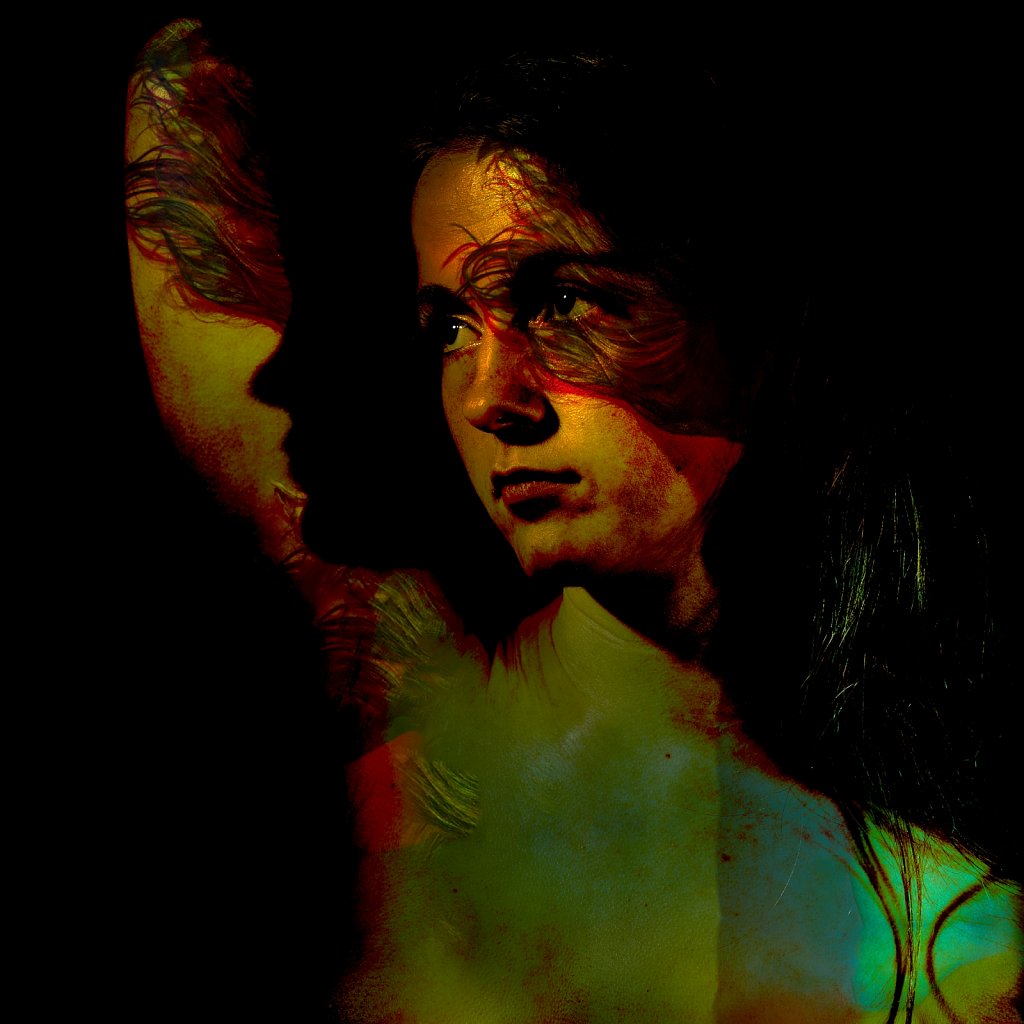
Annastasia has had a difficult life: She was born with major medical issues that required many surgeries. She grew up in foster care. She’s been completely independent since she turned 18 and has been attending UNC Chapel Hill, completing three years toward a degree in neuroscience. She has a scholarship that covers some of her expenses but I’ve watched her work hard to supplement that by working in a campus research lab as well as for a food delivery service on the side. Nevertheless, working two part time jobs has not been sufficient to keep her from accumulating significant debt. She’s currently taking the fall semester off in order to pull herself out of debt that she’s accumulated. So, this year I am going to print and frame some of the work that I have done with her and use half of the proceeds to help her pay down the debt so that she can return to school.

Share
June 18, 2021

Rika Lynn

I interviewed a model about her career and shooting with me for Midwest Models Magazine.

Share
May 6, 2018

Award

I won an honorable mention at the 12X12 show today.

Share
April 9, 2018

The Difference Between a GWC and a Pro

I’ve just responded to yer another person who decried that people who had not done X were not “professionals,” they were just guys with cameras “GWCs.” Strictly speaking to be a professional you need to make your living doing photography, which is harder and harder in times where camera equipment gets cheaper, virtually every cell cell phone has a camera that is better than professional models were a few decades ago, software is able to automate more skills that were once required, there is virtually no cost tot trying to take the same shot multiple times, and people seldom keep albums of physical prints. Since the cost of entry and the skills required are so low there are a lot of people who try to become professionals, some with minimal skills, a camera set on “auto” and a good eye for composition have great business skill and are actually successful.

I know very skilled photographers who choose either to do something more lucrative or who lack the business skills to make a living from photography. I know others that have the skills but don’t want to shoot weddings and senior portraits, which would be what would insure them a steady income. Lack of income from photography does not define you as a GWC.

Let’s leave aside the question of whether you are financially able to make a living with a camera and focus instead on what makes a photographer a “pro” instead of a GWC. I’ve been told by one successful West Michigan photographer that it is consistency. “Every shot I take is a good shot.” I resisted the urge to shoot back that by that measure the best photographers all worked at JC Penny portrait studios, where the camera settings, lighting, subject placement, and camera position were all fixed. I’ve seen others write that the difference is how many good shots you can get in a shoot. I’ve been told that it is whether you are published. Others have agreed with publication as a benchmark but stipulated that print on demand magazines don’t count. I’ve had one person tell me to make it I need to have my work hanging in European museums. Finally, I've seen several people make comments about how the guy shooting with a kit lens or a camera with a retractable lens are just GWCs. I haven't yet pointed out that Mapplethorpe shot with an SX-70 (f8 fixed lens) until 1975 and what he produced is pretty amazing. Surprisingly, all of these people measure professionalism against something that they have achieved.

I am proud of my photographic accomplishments, which I won’t list here because I don’t want to turn this into self promotion, but many of the things enumerated above are things that I hope I’ll never do. I often have a shoot where I am only trying for one great image, not 100 good ones. If I ever get to the point where every shoot is successful it will, in my mind at least, mean that I am not pushing the envelope of what I can do. I’ve published books with co-authors who both self-published and published with commercial publishing houses and I can assure you that sometimes self publishing is the better approach.

Nobody was born with photography skills. We all started as GWCs. Instead of belittling those with less skills or accomplishments than you, measure them by how they treat those around them: other photographers, models, makeup artists, and fans. The true difference between a GWC and a pro is attitude. The rest is time, practice, study, and a bit of luck.

Share
April 7, 2018

Awards

I won two awards that I am very belatedly posting:

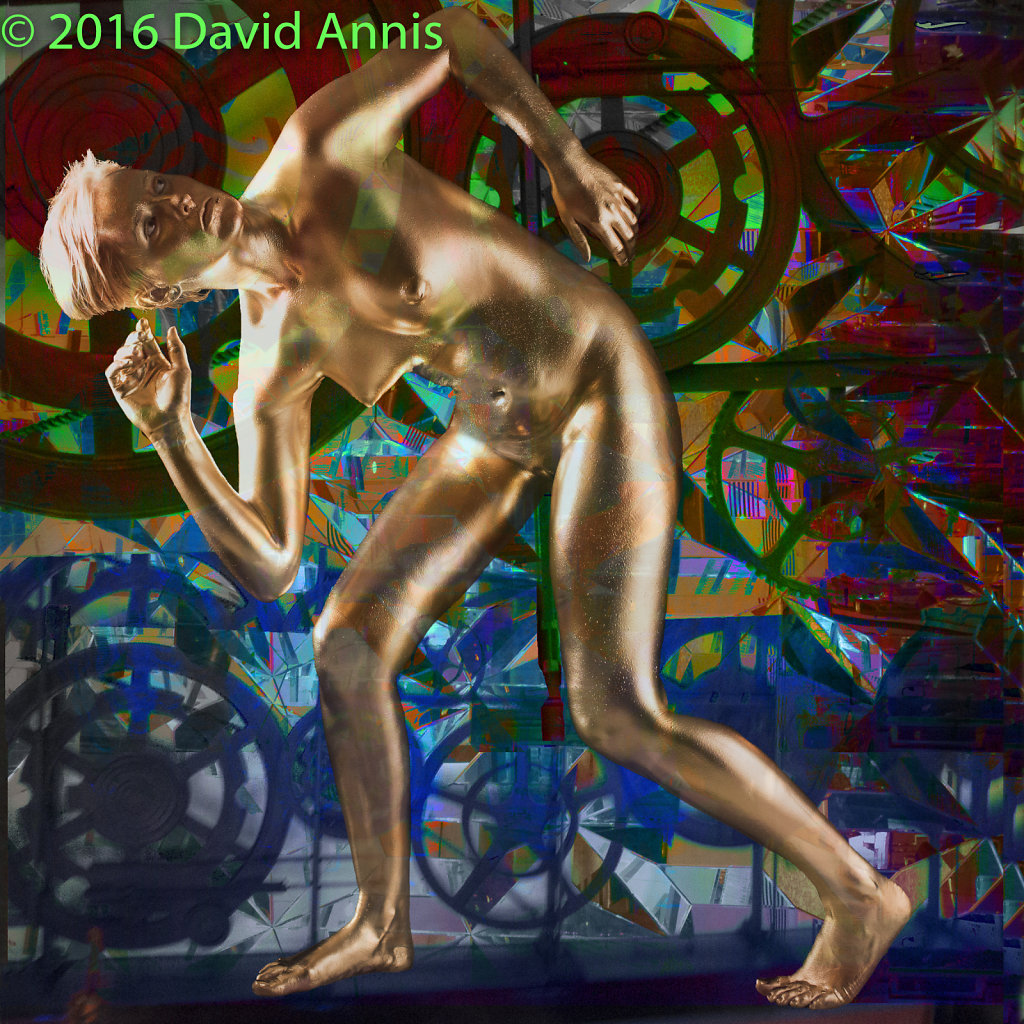
Combination of body paint, travel photos, and compositing

Sonja in the machine won second place in the MMAG 2017 12 X 12 show

Fire GirlCombination of body paint and light painting

and Fire Girl (also modeled for by Sonja Marie) won third prize in the Red Show in 2018

Share
March 28, 2018

Collection from Late 2017 and Early 2018

Here are some of my favorites from late 2017 and early 2018. I've posted a less selective set as a video on my Facebook page.
Share
January 24, 2018

Single Cover

I am doing a single cover and an album cover for Horn and Holland. this is the final version for the single. It went to the printer this morning.

Share
December 23, 2017

Why Is That Photograph So Expensive?

I was talking to a friend with a gallery who had to answer the question posed by a potential customer. Afterwards, I decided to write out an explanation of the economics of an art photographer from the perspective of my most recent sale. Here it is:

Larry, you said that you had a customer ask why a photograph was so expensive, so I thought that I’d write out a brief walk behind the economics of being an art photographer. I’m a pretty established photographer in many ways: I’ve been doing this on and off for over thirty years, routinely exhibit at galleries, and occasionally in an art fair. Nevertheless, I sell about a dozen pieces a year, mostly smaller unframed pieces.

However, the piece I most recently sold was larger, framed, and more expensive, so I’ll use that as an example. I sold the piece for $250. Of that $99 came off the top for professional matting and framing. I could save some money by framing myself, and I’ve tried that route, but frankly I don’t have the equipment, the space to work, or the aptitude to do as good a job as a professional and I don’t want to spend the time learning the techniques or doing the work. That leaves $151.

I paid a commission of 50% of the remainder to the person who sold it. It is a high commission rate, but it is after framing expense so as a percentage of the total it is in line with what I’d expect to pay at most galleries. Some galleries charge a membership or display fee and a lower commission, some just a percentage, but this is in the ballpark of what I’d pay on most sales. That leaves me with $75.50 from this sale. I print myself, with a high end printer (10 colors of expensive archival ink cartridges and nice paper). I’d estimate it cost $14 to produce the print and get it to the frame shop for drop off and pick up. That leaves me with $61.50. Most of the shoots I do are done with makeup artists and models that are working for use of the images I produce, but this one was not. I paid the body painter and the model each $50. I also provided the body paint (probably about $5 worth) That leaves me with negative $43.50. You could argue that the entire cost of the model and painter shouldn’t be allocated to this photo, but unlike other shoots I’ve done with these same people this was rather uninspired and I really doubt I’ll get any other sales from this shoot.

Now, out of my $43 loss on this shoot I need to cover some of the fixed expenses that I have. My camera and lenses are about $4,000. Most of my work is in studio, my studio strobes cost about $2,000. I work with really large files, and do very complex edits. My computer was another $2,500. I pay $10/month for a subscription to Photoshop and Lightroom. I don’t pay for studio time, instead I trade labor, editing senior portraits, shooting weddings, etc. but if I did the going rate is $30/hour. I’d guess that the average shoot is three hours and I do 30-60 shoots/year. So, while most photographers would have lower computer expenses (and possibly a less expensive camera since I do a lot of low light work) than I do, they’d have higher studio costs if they’re doing studio photography.

I’m not going to begin to calculate my losses from damage to frames during transport to and from shows, the cost of business cards, website hosting, and printing flyers for shows. Nor am I going to detail the costs of a display system that I built to hang work on at the East Lansing Art Festival (where it rained) or the cost of memberships that I have in 4 arts organizations but there seem to be new costs every time I turn around. So, I just sold a photograph for $250. It’ll contribute to my annual loss, that runs a well into the thousands of dollars every year. I’m happy though, because I love knowing that a piece I produced spoke to somebody enough that they want it to hang on their wall. That is why a photograph is so expensive.

Share
September 30, 2017

Award

Combination of body paint, travel photos, and compositing

Sometimes I am not very good at publicizing my triumphs. I am about to exhibit in the Mid Michigan Art Guild Fall show and realize that I never posted that this photo won second place in the spring show. Better late than never.

Share
September 26, 2017

Projection Photography How To Article

I was pleased to have an article on how to do projection photography published in issue 6 of Midwest Model Magazine.

View all essays by month
Links
1 of 3
  1. 1 2 3
  2. >
Tweet
  • Home
  • Albums
  • Content
  • Posts
  • Instagram (art)
  • Facebook (everything)
© David Annis